Windows 12 has become one of the most discussed topics in the technology world. Since Microsoft introduced AI-powered experiences into Windows 11, users have been eagerly waiting to see what the next generation of Windows will offer.
While Microsoft has not officially announced Windows 12, numerous reports, leaks, and industry discussions suggest that the company is working on major changes focused on artificial intelligence, security, cloud integration, and next-generation computing.
In this article, we’ll explore everything currently known about Windows 12, including its possible release date, expected features, system requirements, and how it could change the future of personal computing.
Is Windows 12 Officially Confirmed?
As of June 2026, Microsoft has not officially launched or announced Windows 12. In fact, recent statements and industry reports indicate that Microsoft is continuing to focus heavily on Windows 11 and its AI ecosystem rather than unveiling a new operating system immediately.
This means that while Windows 12 is widely expected in the future, its exact launch timeline remains uncertain.
Expected Windows 12 Release Date
There is currently no confirmed release date for Windows 12.
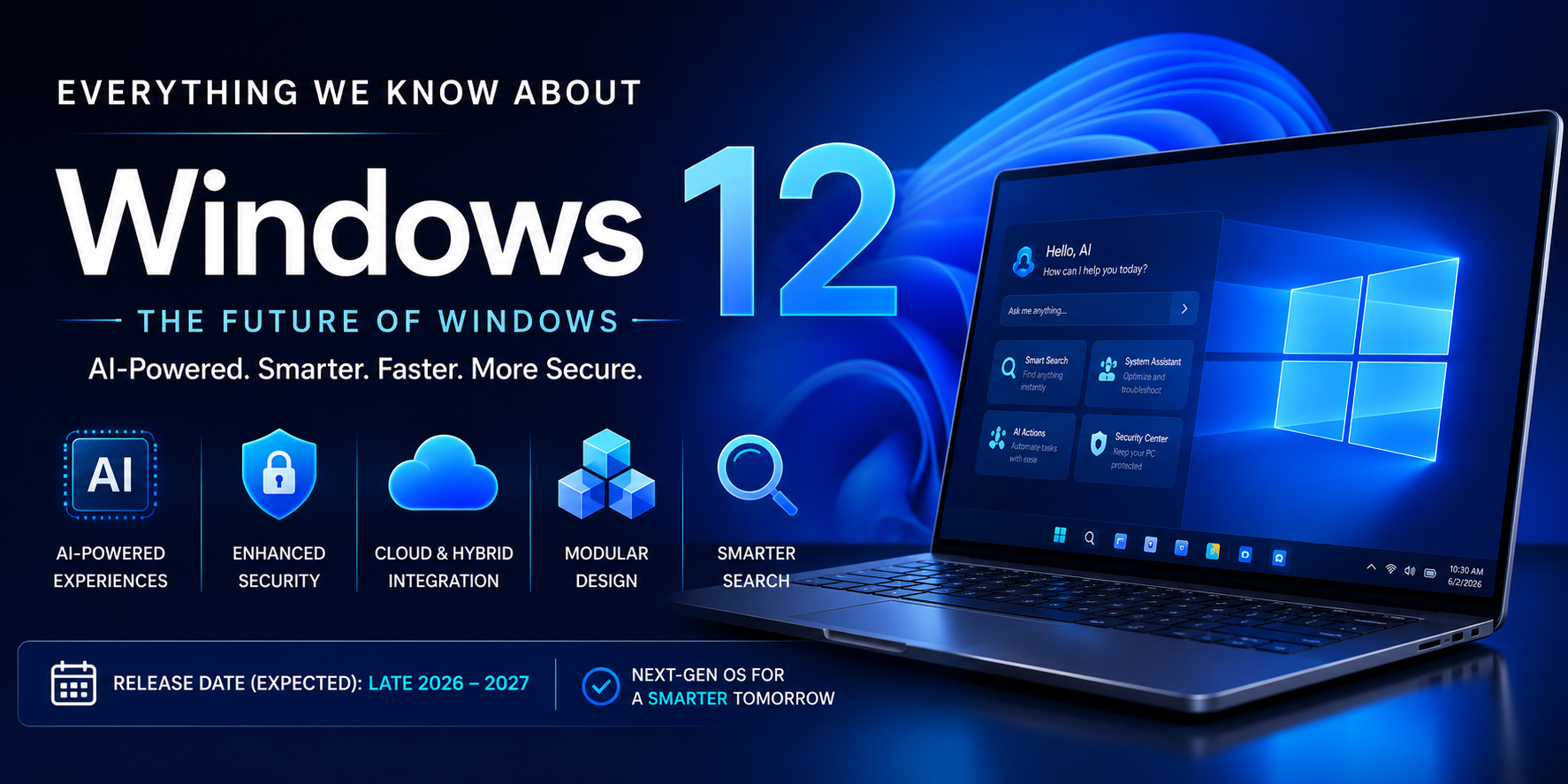
Technology analysts believe Microsoft may launch Windows 12 sometime between late 2026 and 2027, though the company has not publicly committed to any schedule. Several reports suggest that Microsoft’s immediate focus remains improving Windows 11 and expanding AI-powered features through Copilot+ PCs.
Based on Microsoft’s historical release cycle:
- Windows 10 launched in 2015
- Windows 11 launched in 2021
- Windows 12 could potentially arrive between 2026 and 2027
However, users should treat all timelines as speculation until Microsoft makes an official announcement.
AI Will Be the Heart of Windows 12
One thing appears almost certain: artificial intelligence will play a central role in Microsoft’s next operating system.
Microsoft has spent the past two years transforming Windows into an AI-first platform through:
- Microsoft Copilot
- AI-powered Search
- Recall features
- AI-assisted Settings
- Intelligent productivity tools
- On-device AI processing using NPUs
Recent Microsoft announcements show the company moving toward an “agentic AI” future where AI assistants can perform complex tasks on behalf of users rather than simply answering questions.
Windows 12 is expected to build heavily on these capabilities.
Expected Windows 12 Features
1. Advanced Copilot Integration
Microsoft Copilot is likely to become deeply integrated throughout the operating system.
Expected capabilities include:
- Natural language system control
- AI-powered troubleshooting
- Automated workflow creation
- Smart file management
- Personalized recommendations
- Context-aware assistance
Microsoft is already expanding Copilot functionality across Windows 11, making it a strong indicator of Windows 12’s direction.
2. Smarter Search Experience
Searching for files, settings, documents, and applications could become significantly easier.
Instead of typing exact filenames, users may simply ask:
- “Find the PDF I downloaded last week.”
- “Open the presentation I edited yesterday.”
- “Show my vacation photos.”
AI-powered semantic search is already appearing in modern Windows features and is expected to become a core Windows 12 capability.
3. Modular Windows Architecture
Reports suggest Microsoft has been experimenting with a modular operating system architecture sometimes referred to as “CorePC.”
Potential benefits include:
- Faster updates
- Better security
- Improved performance
- Reduced system crashes
- Easier hardware compatibility
A modular design could allow Microsoft to customize Windows for different device categories without maintaining multiple separate versions.
4. Enhanced Security
Cybersecurity threats continue to evolve, making security a major focus for future Windows releases.
Expected improvements include:
- AI-driven threat detection
- Stronger identity protection
- Hardware-level security
- Advanced ransomware defense
- Secure AI agent execution environments
Microsoft has recently introduced new security approaches for AI workloads, indicating that future Windows versions will prioritize safe AI operations.
5. Cloud and Local AI Processing
Microsoft is increasingly promoting Copilot+ PCs equipped with Neural Processing Units (NPUs).
Future Windows versions are expected to combine:
- Local AI processing
- Cloud AI services
- Faster response times
- Better privacy
- Reduced internet dependency
This hybrid approach could enable advanced AI features without constantly relying on remote servers.
Will Windows 12 Require New Hardware?
Possibly.
Many analysts believe Windows 12 will be designed around AI-powered PCs featuring:
- Dedicated NPUs
- Modern processors
- Faster SSD storage
- At least 16GB RAM
- Enhanced security chips
While standard PCs may still run Windows 12, advanced AI features could require Copilot+ PC hardware for full functionality.
User Interface Changes
Rumors suggest Windows 12 may introduce:
- Redesigned taskbar
- Floating interface elements
- Improved widgets
- Dynamic AI-powered desktop experiences
- Modernized system settings
Microsoft continues to experiment with visual redesigns, although no final interface has been confirmed.
Why Microsoft May Delay Windows 12
Interestingly, Microsoft appears focused on evolving Windows 11 instead of rushing a Windows 12 launch.
Recent reports indicate the company is:
- Refining AI features
- Improving performance
- Reducing unnecessary AI clutter
- Enhancing developer tools
- Expanding Windows AI APIs
This strategy allows Microsoft to continuously improve Windows without requiring users to upgrade to a completely new operating system.
Should You Wait for Windows 12?
For most users, the answer is no.
Windows 11 continues to receive major updates, AI enhancements, and security improvements. Microsoft remains heavily invested in the platform, and there is no official indication that Windows 12 is launching immediately.
If you’re planning to buy a new PC, choosing a modern Windows 11 device—especially a Copilot+ PC—will likely prepare you for whatever future Windows version Microsoft releases.
Final Thoughts
Windows 12 remains one of the most anticipated operating systems in the tech industry. Although Microsoft has not officially confirmed its launch, industry reports suggest that AI, security, cloud integration, and modular design will shape the future of Windows.
For now, Microsoft is concentrating on transforming Windows 11 into an AI-powered platform capable of supporting next-generation computing experiences. Whether the company ultimately calls the next release “Windows 12” or continues evolving Windows 11, one thing is clear: the future of Windows will be powered by artificial intelligence.
Stay connected with Infovision Media for the latest Windows 12 news, leaks, updates, and expert analysis.